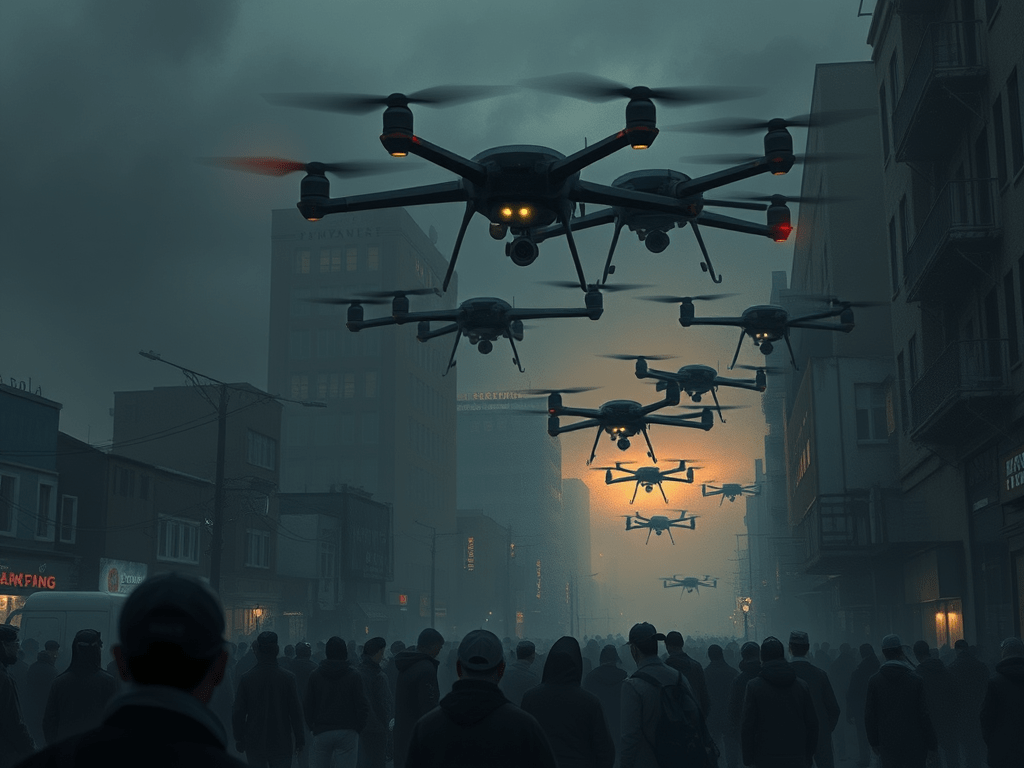
Drone swarms can potentially be used against civilian populations in ways that are concerning due to their capabilities for surveillance, disruption, or even direct harm. Here are key examples:
1. Surveillance and Privacy Invasion
• Mass Monitoring: Swarms of drones can conduct real-time surveillance over large areas, tracking individuals or groups without their knowledge. This could be used to suppress dissent or monitor populations excessively.
• Facial Recognition: Equipped with advanced cameras, drones can identify individuals, creating risks of targeted surveillance or profiling.
2. Crowd Control
• Disruption Tactics: Drones could scatter crowds by emitting noise, shining bright lights, or dispersing chemical agents like tear gas.
• Psychological Impact: Swarms hovering ominously over protests or gatherings could intimidate civilians and discourage assembly.
3. Weaponization
• Small-Scale Weapons: Drones in swarms could carry lethal or non-lethal payloads such as explosives, tasers, or projectiles, allowing for targeted or indiscriminate attacks.
• Precision Strikes: Swarms can coordinate to target specific individuals or infrastructure with devastating accuracy.
4. Cyber and Communication Disruption
• Jamming Signals: Drones could disrupt cell towers, internet connections, or radio signals, cutting off communication in civilian areas.
• Hackable Infrastructure: Drones could be hijacked to attack digital infrastructure, spreading malware or disrupting power grids.
5. Economic Disruption
• Supply Chain Attacks: Drone swarms could disrupt supply lines by attacking warehouses, trucks, or ports, leading to shortages.
• Agricultural Sabotage: In rural areas, they could damage crops or harass livestock, undermining food security.
6. Psychological Warfare
• Fear and Intimidation: Swarms of drones buzzing overhead can create anxiety and panic, even without direct violence. Their mere presence can make people feel watched and unsafe.
• Fake Attacks: Swarms can simulate attacks to create chaos or drive people out of certain areas.
7. Targeted Harassment
• Stalking Individuals: Drones can follow specific targets, making people feel constantly monitored or unsafe.
• Spying on Homes: Peering into windows or backyards, drones could invade personal spaces.
8. Autonomous Misuse
• AI Decisions: If swarms are controlled by AI, there’s a risk of errors or misuse leading to unintended harm. Rogue programming could target civilians indiscriminately.
• Self-Sustaining Swarms: Fully autonomous swarms could operate without direct human oversight, escalating risks of unchecked activity.
Mitigating the Threats
• Regulation: Strict laws on drone usage, especially for swarms, can reduce risks.
• Anti-Drone Technology: Tools like signal jammers, nets, or counter-drones can help protect civilians.
• Awareness: Civilians should understand how to recognize and respond to drone activity in their area.
If you’d like, I can provide additional information or suggest ways to prepare for or defend against these potential risks.
#DroneSwarmThreat #ModernWarfare #SurveillanceState #EyesInTheSky #CivilianProtection #DroneTechnology #AntiDroneTech #FutureThreats
#SecurityMatters
 inTHEknow