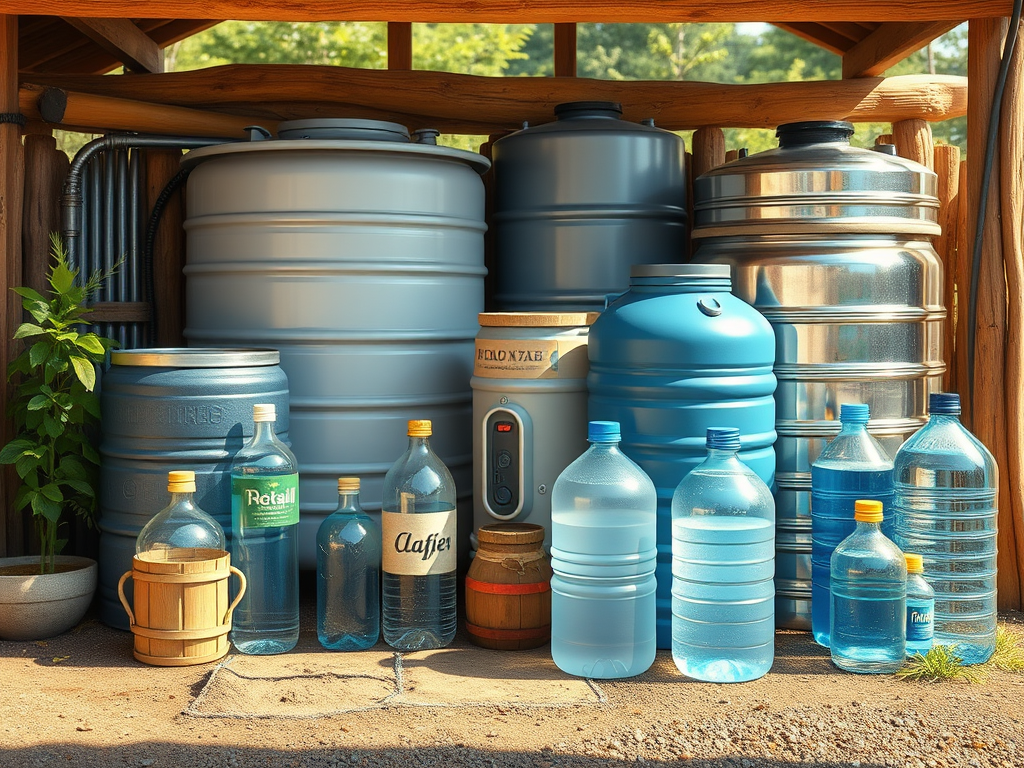
Water storage is a critical component of emergency preparedness, especially on a homestead. Here’s an in-depth look at its importance, methods, and best practices:
1. Importance of Water Storage
- Basic Survival Need: Water is essential for survival. Humans can only last a few days without it, making it a top priority in emergency situations.
- Health and Hygiene: Adequate water storage supports sanitation and hygiene, crucial for preventing illness during emergencies.
- Agricultural Needs: For homesteaders, stored water can sustain livestock and irrigate crops, ensuring food security even during droughts or disruptions in supply.
2. Types of Water Sources
- Rainwater Harvesting: Collecting rainwater from roofs into barrels or cisterns is a sustainable method. Ensure collection systems are designed to filter out debris and contaminants.
- Well Water: If you have a well, ensure it’s properly maintained and that you have backup power options for pumping during outages.
- Municipal Water Supply: In urban areas, storing water from the tap can be effective. Be mindful of the potential for supply disruptions in emergencies.
3. Storage Solutions
- Containers: Use food-grade plastic barrels, stainless steel containers, or glass bottles. Ensure they are clean and properly sealed to prevent contamination.
- Volume Considerations: Aim for at least one gallon of water per person per day for drinking and basic hygiene. For a family of four, this means storing a minimum of 28 gallons for a week.
- Long-term Storage: Consider larger tanks or cisterns for long-term storage. These can be buried or above ground, depending on your space and budget.
4. Water Treatment and Purification
- Water Quality Testing: Regularly test stored water for contaminants, especially if sourced from rainwater or wells.
- Purification Methods: Keep purification tablets, a water filter, or a method for boiling water on hand. Understanding how to treat water can prevent illness during emergencies.
- Bleach Treatment: Household bleach can be used for emergency disinfection (8 drops per gallon of clear water, 16 drops for cloudy water). Let it sit for 30 minutes before using.
5. Maintenance and Rotation
- Regular Rotation: For short-term storage, rotate water supplies every six months to ensure freshness. Mark containers with the date of storage.
- Cleaning Storage Tanks: Regularly clean and disinfect water storage tanks or barrels to prevent algae growth and bacterial contamination.
6. Emergency Planning
- Water Storage Plan: Develop a comprehensive water storage plan that outlines how much water you need, where it will come from, and how it will be stored.
- Accessibility: Ensure stored water is easily accessible. Keep emergency supplies organized so you can quickly retrieve what you need during a crisis.
- Training and Knowledge: Educate family members about the importance of water storage, treatment methods, and how to respond in emergencies.
7. Considerations for the Homestead
- Zoning and Regulations: Check local laws regarding rainwater harvesting and water storage. Some areas have specific regulations you must follow.
- Integrated Systems: Consider integrating your water storage with other homestead systems, such as gray water recycling for irrigation or composting toilets to conserve water.
8. Alternative Sources and Conservation
- Alternative Sources: In addition to stored water, consider options like nearby rivers or lakes, but ensure you have a purification method.
- Water Conservation Practices: Implement conservation measures such as drip irrigation, mulching, and planting drought-resistant crops to minimize water usage.
Water storage is a foundational element of emergency preparedness on a homestead. By understanding its importance, employing effective storage solutions, and incorporating purification methods, you can ensure a reliable water supply for yourself, your family, and your livestock. Planning and maintaining water storage will enhance your resilience in the face of emergencies and contribute to overall self-sufficiency.
 inTHEknow