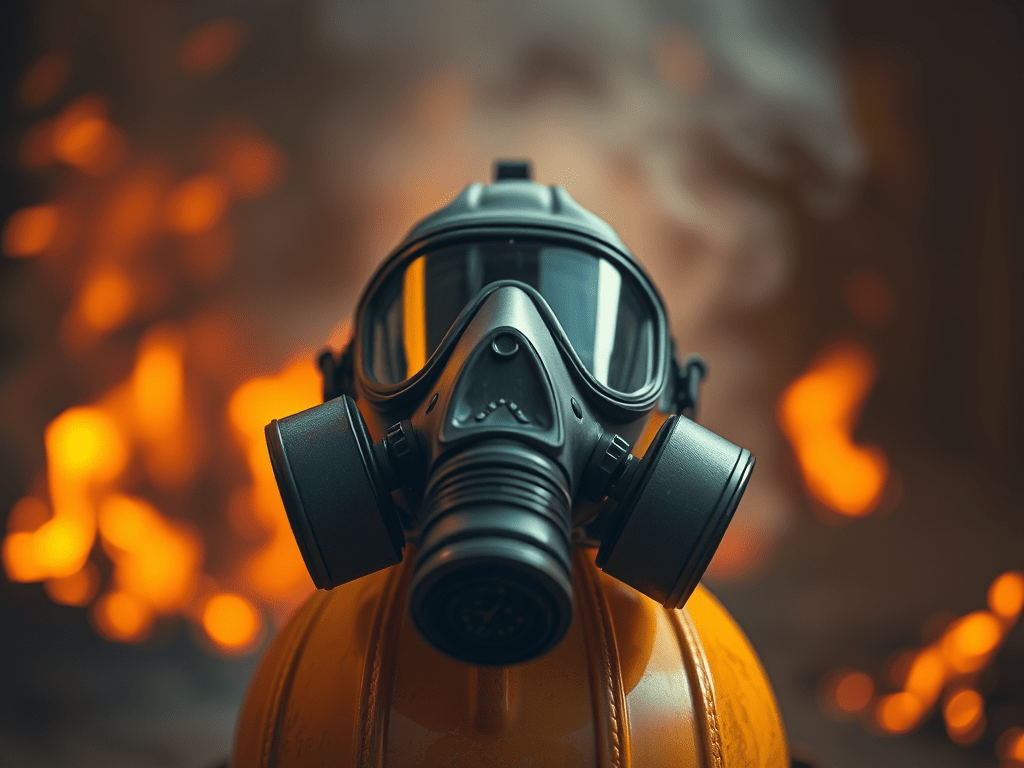
1. Filtration Mechanism and Limitations:
Standard gas masks use specific filter cartridges designed for various types of chemical or biological agents, such as organic vapors, acid gases, or particles. These filters work by capturing particles or binding chemicals onto a medium like activated carbon. However, the filters in a typical gas mask are not capable of handling certain toxic gases prevalent in fires, such as carbon monoxide (CO) and hydrogen cyanide (HCN). Here’s why:
- Activated Carbon Filtering: Gas masks generally rely on activated carbon, which can capture larger particles and absorb some chemicals. However, carbon monoxide molecules are too small and require specific catalytic filtering (often used in escape hoods).
- Cartridge Specificity: Gas mask filters are often marked for their compatibility with certain chemicals. If the mask isn’t rated for CO or HCN, the user will be exposed to these highly toxic gases.
2. Lack of Oxygen Supply and Risks of Oxygen Deficiency:
Unlike Self-Contained Breathing Apparatus (SCBA) systems, a gas mask does not supply its own air. Instead, it relies on filtering existing air, which is dangerous in a fire. Fires consume oxygen quickly, especially in enclosed spaces, creating an oxygen-deficient environment. In such cases, no mask that depends on surrounding air can protect you, as oxygen levels drop to dangerously low levels.
- Hypoxia and Suffocation: In a fire, oxygen levels can drop below the 19.5% considered safe. Low oxygen not only leads to suffocation but also can hinder mental clarity and motor functions, making it difficult to escape.
3. Physical Tolerance and High-Temperature Vulnerability:
Gas masks are typically not designed to withstand the high heat of a fire, and they may degrade or even melt in extreme temperatures. Specialized equipment, like firefighters’ SCBAs and flame-resistant gear, is needed to protect against the high heat of flames and the scorching temperatures in smoke-filled areas.
 inTHEknow