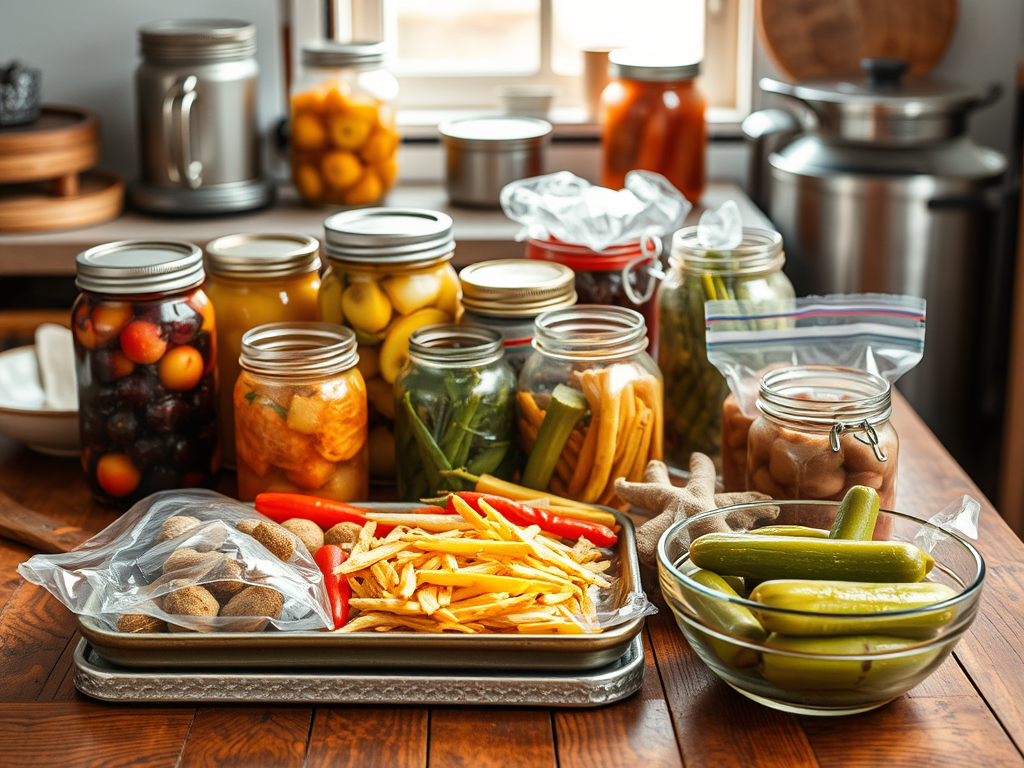
When it comes to food preservation, preppers and homesteaders alike rely on tried-and-true methods to extend the shelf life of their harvests and stock up for emergencies. Here are the six best ways to preserve food and keep it safe, nutritious, and tasty for the long term.
Canning
Canning is one of the most popular and reliable food preservation methods, as it allows for long-term storage without refrigeration. There are two main types:
• Water Bath Canning: Best for high-acid foods like fruits, jams, pickles, and tomatoes. The high acidity helps prevent bacteria growth, so these foods only need to be processed in boiling water.
• Pressure Canning: Necessary for low-acid foods like vegetables, meats, and soups. Pressure canning reaches higher temperatures to kill bacteria, such as botulism spores, that could survive boiling water.
Pros: Long shelf life, retains flavor and nutrients well, doesn’t require refrigeration.
Cons: Requires special equipment (pressure canner), and improper techniques can lead to spoilage or foodborne illness.
Dehydration
Dehydrating food removes moisture, which prevents bacteria and mold from growing. You can dehydrate almost anything: fruits, vegetables, herbs, meats (like jerky), and even full meals.
• Methods: Electric dehydrators are convenient and efficient, but you can also dehydrate in an oven set to a low temperature or even in the sun (in warm, dry climates).
Pros: Lightweight, compact, easy to store, no need for refrigeration, retains nutrients.
Cons: Some foods don’t rehydrate perfectly, and it can be time-intensive to dry foods thoroughly.
Freezing
Freezing food is convenient and maintains the taste, color, and texture of most items better than other preservation methods. Nearly any food can be frozen, from fruits and vegetables to meats and prepared meals.
• Preparation: Blanch vegetables before freezing to stop enzyme activity, which can affect taste and texture. Use vacuum-sealed or airtight containers to prevent freezer burn.
Pros: Retains nutrients, flavor, and texture well; easy to prepare.
Cons: Requires electricity, so it’s not ideal for long-term emergencies; freezer burn can occur if not sealed properly.
Fermentation
Fermentation is an ancient preservation method that uses natural bacteria to create lactic acid, which inhibits spoilage. Common fermented foods include sauerkraut, kimchi, pickles, yogurt, and kombucha.
• Process: Simply add salt to vegetables or use a starter culture for dairy. The salt or starter encourages beneficial bacteria to thrive, creating a naturally preserved, probiotic-rich food.
Pros: Enhances flavor and adds beneficial probiotics, doesn’t require electricity, extends shelf life significantly.
Cons: Requires careful handling to prevent mold or contamination, has a strong flavor that may not appeal to everyone.
Vacuum Sealing
Vacuum sealing removes air from packaging, which slows the growth of bacteria and helps food last longer, especially when combined with freezing or other preservation methods. Vacuum-sealed bags are ideal for storing dry foods, meats, and even dehydrated items.
• Best Uses: Ideal for dry goods like rice, grains, nuts, and dried fruits. Can also be used to extend the freezer life of meats and vegetables.
Pros: Extends shelf life significantly, prevents freezer burn, compact for storage.
Cons: Requires a vacuum sealing machine, bags can be punctured if stored improperly.
Salting and Curing
Salt draws moisture out of food, making it inhospitable to bacteria. Curing is commonly used for preserving meats and fish (like salami, ham, or salted cod), but can also work with vegetables.
• Methods: Dry salting involves rubbing salt onto the food, while brining involves submerging food in a saltwater solution. Smoke curing is a variation that adds flavor and extends the shelf life even further.
Pros: Long shelf life, no need for refrigeration, adds unique flavors.
Cons: High salt content may not be suitable for everyone, requires specific techniques to ensure safety.
Choosing the Right Method
Each preservation method has its strengths, and in many cases, combining methods can be highly effective. For example, vacuum-sealing dehydrated food or freezing vacuum-sealed meats can extend shelf life even further. Experimenting with different methods can help you find the best techniques for your lifestyle, needs, and food preferences.
 inTHEknow