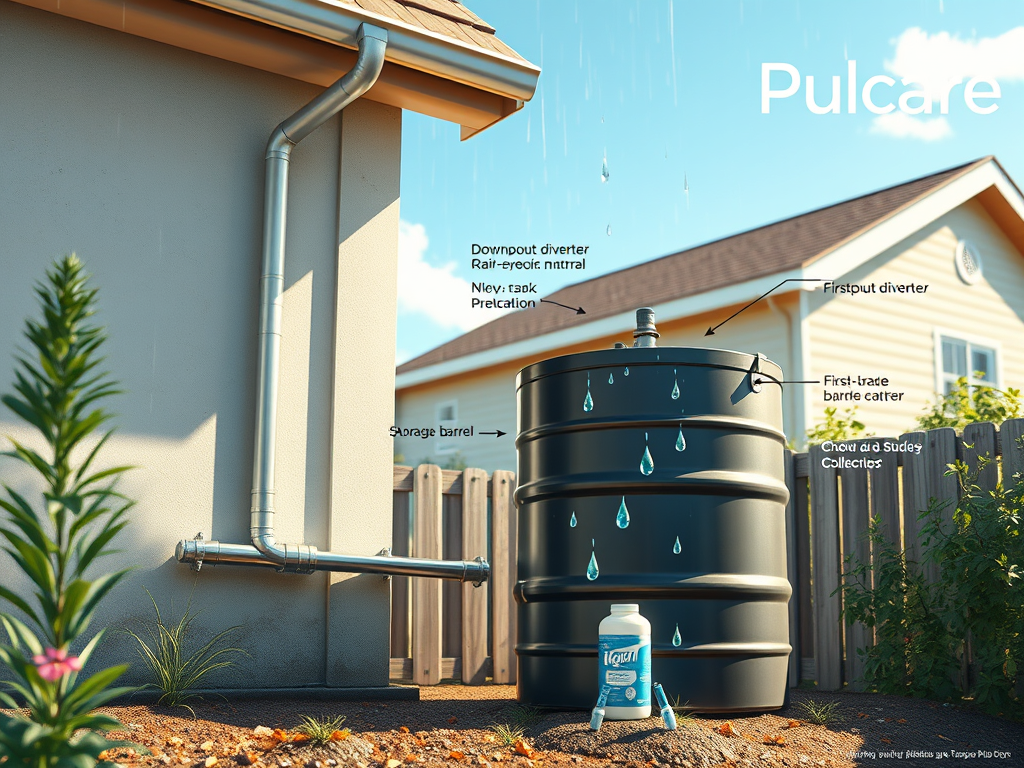
A DIY off-grid rainwater collection system is a sustainable and reliable way to gather water, especially valuable for remote areas, emergency preparedness, or reducing dependency on municipal water. Here’s a step-by-step guide to building a simple off-grid rainwater collection system:
- Materials Needed • Collection Surface (Roof or Tarp): A sloped, non-toxic surface (often a roof) where rainwater can flow into a gutter.
• Gutter System: Attaches to the edge of your collection surface and directs rainwater to the storage tank.
• Downspout Diverter: A diverter that channels water from the gutter to the storage system and prevents debris.
• First-Flush Diverter: A device to redirect the first flow of water, which may contain contaminants, away from the storage tank.
• Storage Tank (Barrel or Cistern): A food-grade container to store the water. Size depends on expected rainfall and storage needs.
• Filtration and Purification System: Includes filters (like sand, carbon, or mesh filters) and may include UV or chemical purifiers for potable water.
• Overflow Valve: Prevents tank overflows by diverting excess water away from the storage area.
• Screen or Mesh Cover: Covers the tank opening to prevent insects, leaves, and debris from entering. - Steps to Build an Off-Grid Rainwater Collection System
- Set Up the Collection Surface: If you’re using a roof, ensure it’s non-toxic and clean; metal or tiled roofs work best. Position your gutters to capture the maximum flow.
- Install Gutters and Downspout: Attach gutters to the roof’s edge and install a downspout that directs water from the gutter toward the storage tank. Make sure the slope of the gutter directs all water toward the downspout.
- Add a First-Flush Diverter: Install a first-flush diverter in the downspout to direct the first few gallons of rainwater away from your storage tank. This initial water often contains dust, bird droppings, or other contaminants that may have settled on the roof.
- Connect the Storage Tank: Position your tank or barrel below the downspout or at a slightly lower point to allow gravity to direct water flow into it. Use food-grade barrels or tanks to prevent contamination, especially if you plan to use the water for drinking.
- Install an Overflow Valve: Connect an overflow pipe to the top of the storage tank to direct excess water away from your foundation or storage area. You can divert overflow to a secondary barrel or a designated drainage area.
- Set Up Filtration and Purification: For potable water, set up a multi-stage filtration system. Pre-filters, such as sand or carbon filters, can remove sediment and organic matter. To ensure safe drinking water, add UV purification or treat the water with appropriate chemical disinfectants.
- Cover and Seal the Tank: Place a fine mesh cover over the tank opening to prevent insects, leaves, and debris from entering. A sealed tank also helps prevent algae growth by limiting sunlight exposure.
- Optional Add-Ons for Greater Efficiency • Pump System: If you need water pressure, add a hand pump or a solar-powered pump to draw water from the tank.
• Backup Filters: Install a secondary, portable water filter, like a Berkey or LifeStraw, for extra purification.
• Float Valve or Level Indicator: Helps you monitor water levels and prevent overflows.
Tips for Using an Off-Grid Rainwater Collection System
- Keep the Roof and Gutters Clean: Regularly clean your collection surface and gutters to prevent contaminants from entering the system.
- Inspect Filters and Diverters: Check your filters and first-flush diverter regularly to maintain efficiency.
- Protect Against Freezing: In colder climates, insulate the tank or use an underground cistern to prevent freezing.
Benefits of a DIY Off-Grid Rainwater Collection System
- Self-Sufficiency: You’ll have a renewable water source for drinking, gardening, and other needs without relying on external supplies.
- Eco-Friendly: Rainwater harvesting conserves water and helps reduce the environmental impact of municipal water treatment.
- Cost Savings: A rainwater system can lower water bills and serve as a valuable backup during droughts or shortages.
Setting up an off-grid rainwater system is a practical, sustainable approach to water security and a valuable addition for anyone seeking self-reliance or emergency preparedness.
 inTHEknow