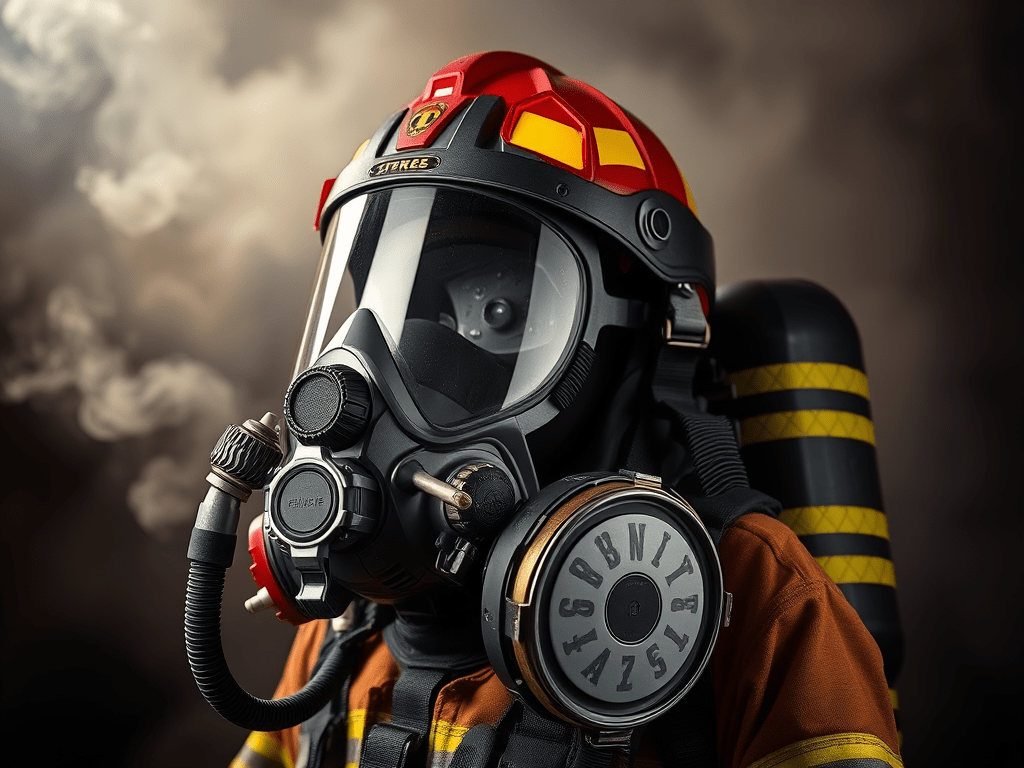
To truly protect yourself in a fire, you need specialized equipment capable of handling the particular dangers of fire smoke and oxygen deficiency. Here’s what actually works:
1. Self-Contained Breathing Apparatus (SCBA):
SCBAs are the standard for firefighters and rescue personnel because they supply their own air via a pressurized tank. This equipment provides several advantages:
- Independent Air Source: With an SCBA, users can breathe clean, pressurized air that’s entirely independent of the surrounding environment, so oxygen levels aren’t an issue.
- Superior Filtration and Duration: SCBAs provide a continuous supply of air, usually lasting 30–60 minutes depending on the tank size, allowing time to escape.
- Protection Against High Heat: SCBAs are typically paired with heat-resistant masks and gear, protecting users in extreme temperatures.
While effective, SCBAs are bulky, costly, and require training, making them impractical for general civilian use outside of professional firefighting or specialized emergency response.
2. Escape Respirators and Smoke Hoods:
Compact and portable, escape respirators or smoke hoods offer some level of protection for civilian use, specifically designed to help people evacuate from smoke-filled environments. They are not as robust as SCBAs but offer practical solutions:
- Carbon Monoxide Filters: Many escape respirators contain special filters that can convert CO to CO2, allowing for safer short-term breathing.
- 15–30 Minute Usage: These hoods usually provide enough protection to exit a building, typically lasting between 15 and 30 minutes.
- Simple, User-Friendly Design: Most escape respirators are designed to fit quickly over the head, creating a protective seal around the face.
3. Emergency Smoke Hoods with Multi-Gas Filtration:
Some high-quality smoke hoods also filter out a range of toxic gases like HCN and ammonia, in addition to CO. These models may include a mouthpiece or nose clip to secure airways and provide short-term evacuation time, making them a good choice for homes or office settings in fire-prone areas.rone areas.
 inTHEknow