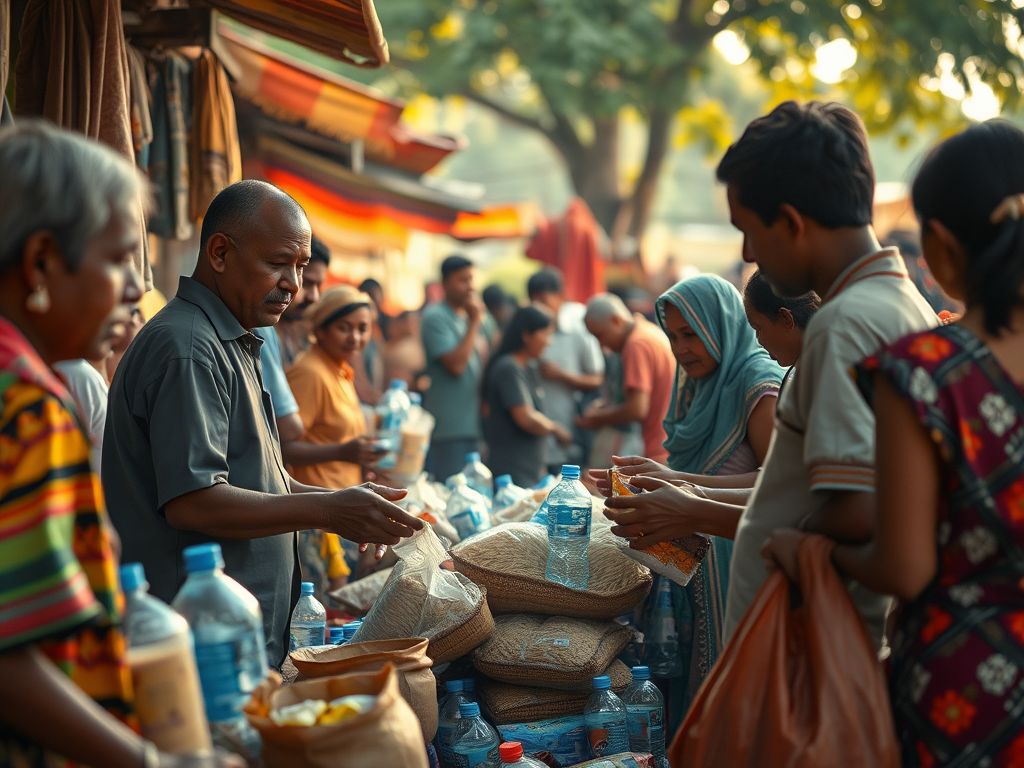
In the absence of formal economic structures, makeshift marketplaces or trade hubs could arise. These would be places where people gather to exchange goods. Often, these bartering systems might not involve strict “one-for-one” exchanges, but rather negotiated trades based on perceived value.
For example, someone with a bag of rice might trade for a bottle of water, but they might need to give up a few other small items or offer their labor (e.g., fixing a vehicle) to make the deal worthwhile for the other party.
These markets might be informal, but there could be some common standards that emerge over time. For example, a bottle of clean water could equal a certain amount of canned food or a certain quantity of gasoline. “Trade credit” could also become a thing, where people owe goods or services at a later date.
 inTHEknow