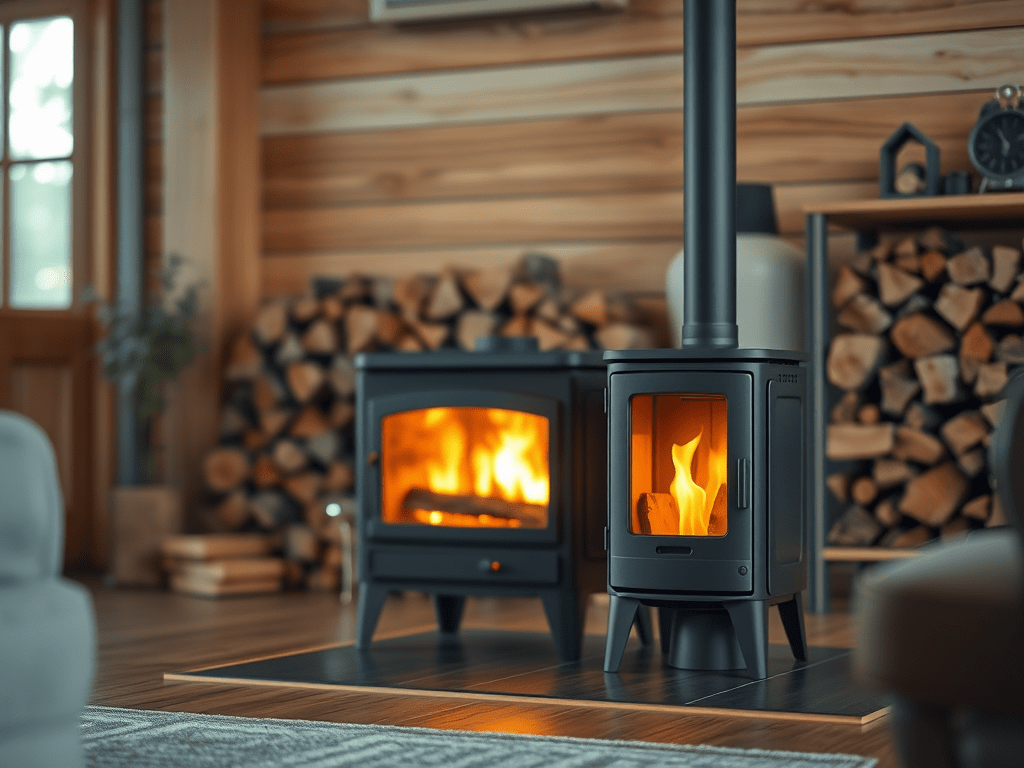
Wood-burning stoves provide a low-carbon alternative to heating your home with fossil fuels. Trees absorb carbon dioxide, and when their wood is burned, this carbon dioxide is released back into the atmosphere. When managed sustainably, new trees absorb the carbon emitted during combustion, creating a closed carbon cycle that results in no net increase in atmospheric carbon dioxide. If you source your wood sustainably or locally, your wood burner can be nearly carbon neutral.
While wood burning is generally considered a greener option, using “green” wood is not. Freshly chopped wood can contain up to 67% moisture, which means a significant amount of energy is expended to evaporate this water before the wood can produce heat. As a result, you may need to burn more than twice the amount of logs to achieve the same heat output.
Using properly seasoned wood, such as kiln-dried firewood sourced from nearby, results in fewer smoke emissions and a cleaner, more environmentally friendly fuel.
 inTHEknow