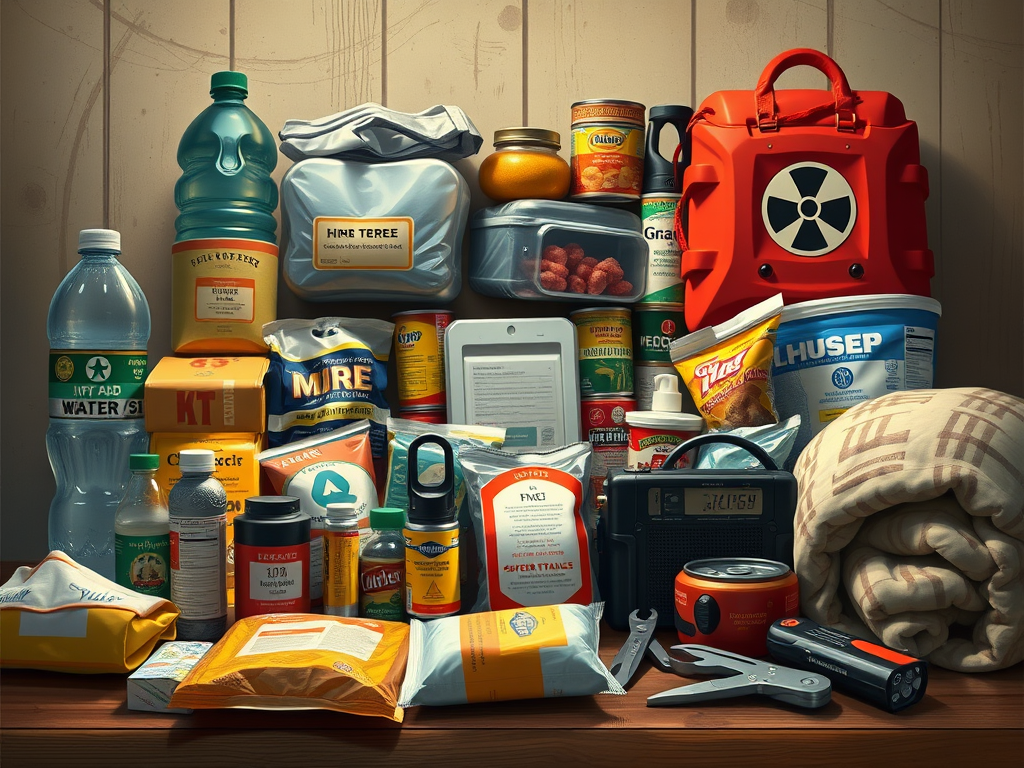
Your emergency preparedness kit should be comprehensive, with items to help you survive in a fallout shelter and cope with long-term survival.
Basic Supplies for a Nuclear Attack:
- Water: At least one gallon of water per person per day for at least 7-10 days (for drinking and sanitation). In a long-term scenario, you may need more, so consider water purification tablets or a filter.
- Food: Non-perishable, easy-to-prepare food (e.g., MREs, canned goods, freeze-dried meals). Aim for a 1-2 week supply, or longer if possible.
- First Aid Kit: A well-stocked first aid kit that includes antiseptics, bandages, pain relievers, and any medications you or your family members may need.
- Potassium Iodide (KI): Potassium iodide can help protect your thyroid from radiation poisoning by blocking radioactive iodine. You can get KI tablets from pharmacies or emergency supply stores, but make sure you understand when and how to take them (usually within hours of exposure).
- Radiation Detector: A Geiger counter or radiation detection device to help you gauge levels of radiation in the area. This can help you determine if it’s safe to leave shelter.
- Battery-Powered Radio: To receive emergency updates, news, and instructions from authorities.
- Flashlights and Batteries: Since power outages are likely, stock up on flashlights, headlamps, and spare batteries.
- Personal Hygiene Items: Toiletries, wet wipes, and trash bags for sanitation. It may be difficult to access clean water, so these are critical for maintaining hygiene.
- Blankets and Warm Clothing: If you’re stuck in a shelter for an extended period, you’ll need warmth. A sleeping bag or warm blankets is crucial, especially if you’re in a cold climate.
- Multitool or Basic Tools: A good tool for repairs or to create makeshift survival solutions.
 inTHEknow