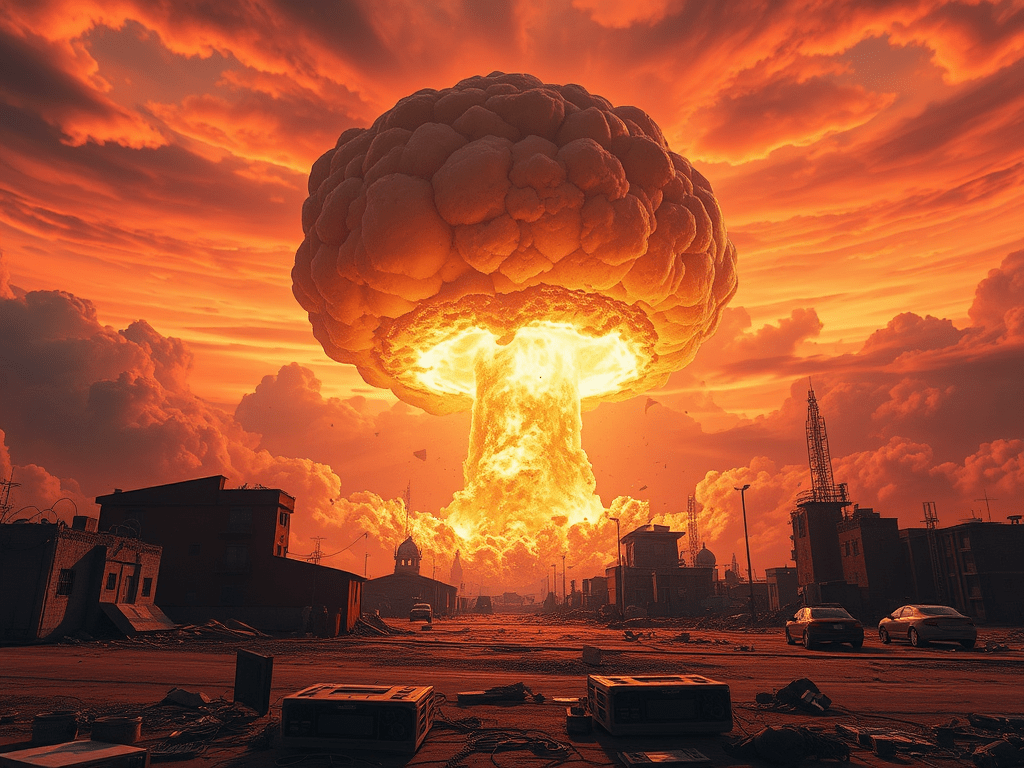
Nuclear attacks can come in various forms: an airburst (detonation high in the atmosphere), a ground burst (detonation at or near ground level), or even an underwater burst. The effects depend on several factors such as the size of the bomb, the distance from ground zero, and the location of the detonation.
- Blast: The immediate impact of a nuclear explosion causes a shockwave with extreme pressure, leading to destruction of buildings, infrastructure, and anything in its path.
- Radiation: A nuclear blast releases deadly ionizing radiation, both from the immediate explosion and fallout (radioactive particles that descend after the explosion). The radiation can cause severe burns, radiation sickness, and increase the risk of long-term cancer.
- Thermal Radiation: A nuclear explosion produces intense heat, capable of causing fires and burns over a large radius.
- Electromagnetic Pulse (EMP): A nuclear detonation at high altitude could create an EMP, which can knock out electronics, power grids, and communication networks across a wide area.
 inTHEknow